The country of Cameroon is located in the western part of Africa. It is bordered by Nigeria to the west, Chad and the Central African Republic to the east, and Equatorial Guinea, Gabon, and the Republic of the Congo on the south. The capital of Cameroon is Yaoundé’.
Missionaries arrived in the mid-19th century, and the land was subsequently colonized by Germany in 1884. After World War 1, it was divided between France and Britain. French Cameroon gained independence in January 1960, and British Cameroon later joined in October 1961 in a plebiscite organized by the United Nations. Cameroon at this time became known as The Federal Republic of Cameroon which was later changed to the United Republic of Cameroon in 1972 and finally into the Republic of Cameroon in 1984.
The country is ethnically diverse with over 225 individual groups. The local economy is driven by foreign aid, a wide variety of agricultural ventures and oil and timber production. The people of Cameroon are very hard working and extended families are very common. The country is called “Africa in Miniature” for its geological and cultural diversity.
The tropical coastal areas of Cameroon receive copious amounts of rain, in some years the rainfall has exceeded 30 feet. In the northern areas, yearly precipitation amounts are much lower, averaging near 30 inches. Drought is a way of life in the far north.
Daily highs in the mid-80’s are commonplace, and overall, mean temperatures average in the high 70’s. Cameroon is slightly warmer in the south, and a bit cooler in the western mountains.
The quality of healthcare is generally poor. Outside the major cities, facilities are often very poorly equipped with basic needs and amenities. Endemic diseases include dengue fever, filariasis, leishmaniasis, malaria, meningitis, schistosomiasis, and African sleeping sickness.
Poverty and unemployment are very high in Cameroon. The unemployment rate was estimated at 30% in 2001, and about a third of the population was living below the international poverty threshold of $1.25 per day in 2009. Many people spend their lifetime living hand to mouth.
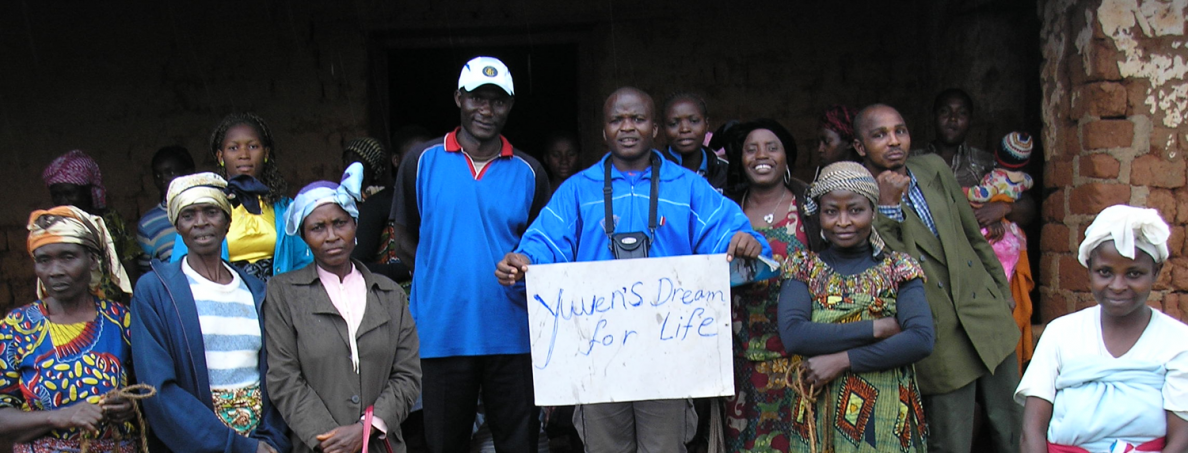
 Yuvens Dream